HOME ABOUT US HISTORY STALLION MARES SHOW RESULTS FOR SALE INFORMATION NEWS GALLERY CONTACT US
I purchased some classics on horse care... I gradually came to understand that they were like 19th-century religious tomes on how to save your soul: objective, good; instructions, extremely detailed; practical application, impossible. C.J.J. Mullen |
Miscellany |
||||||||||||||||||||||||||||||||||||||||||||||||||||||||||||||||||||||||||||||||||||||||||||||||||||
| Back to INFORMATION | ||||||||||||||||||||||||||||||||||||||||||||||||||||||||||||||||||||||||||||||||||||||||||||||||||||
| 2007 | 2008 | 2009 | 2010 | 2011 | ||||||||||||||||||||||||||||||||||||||||||||||||||||||||||||||||||||||||||||||||||||||||||||||||||||
We've gathered together some handy hints, bits of venerable wisdom and a smattering of ancient lore. If we can't find any fascinating tid-bits for you, then we will hunt out a sensible quotation or an unusual word. We'll leave it up to you to sort the wheat from the chaff. |
||||||||||||||||||||||||||||||||||||||||||||||||||||||||||||||||||||||||||||||||||||||||||||||||||||
| April 2011 | ||||||||||||||||||||||||||||||||||||||||||||||||||||||||||||||||||||||||||||||||||||||||||||||||||||
Did you know that that 'bidet' is an old French word for 'pony'? And that the bidet is so named because you, ah, ride it... Like a pony! |
||||||||||||||||||||||||||||||||||||||||||||||||||||||||||||||||||||||||||||||||||||||||||||||||||||
| March 2011 | ||||||||||||||||||||||||||||||||||||||||||||||||||||||||||||||||||||||||||||||||||||||||||||||||||||
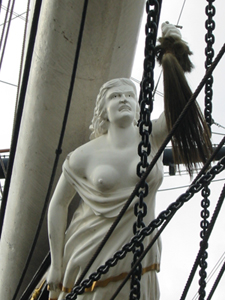
The Cutty Sark and the Horse's Tail The Cutty Sark - the world's last Tea Clipper - has the beautiful witch Nannie as figurehead. With arm outstretched, her hand traditionally holds a horse's tail, and when this was not available (as at sea), her sailor's would make a 'tail' from rope and place it in her hand.
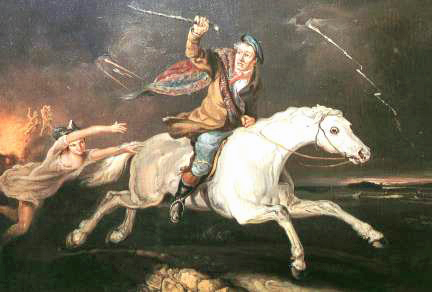
The origins for this can be found in Tam o'Shanter, a poem by Robbie Burns. Tam, riding his gray mare Meg home from the pub one night, spies a coven of witches dancing. When they are finished, he calls out congratulating the beautiful witch, Nannie, who is wearing a 'cutty sark' (short shift). The witches are incensed and chase him - he races his speedy mare for the bridge (knowing that the witches cannot cross running water) - but the fleet Nannie catches hold of poor Meg's tail and rips it off. Now, do thy speedy utmost, Meg,
|
||||||||||||||||||||||||||||||||||||||||||||||||||||||||||||||||||||||||||||||||||||||||||||||||||||
| February 2011 | ||||||||||||||||||||||||||||||||||||||||||||||||||||||||||||||||||||||||||||||||||||||||||||||||||||
Those of us familiar with Imperial units, or those who are into engines in one way or another, will have seen or used the term 'horse power' many times. But what is Horse Power exactly? The term horse power was invented by the engineer James Watt (1736 - 1819). He was working with coal mines, where ponies and horses were used to pull coal out of the ground with pullies. He determined that on average, a pit pony could do 22,000 foot-pounds of work in a minute. Confused? Imagine that a pit pony can raise 330 pounds of coal 100 feet in one minute... that's one horse power. Watt increased the number by 50% to 33,000 foot-pounds of work per minute - an abitrary number that has stuck around for a couple of hundred years. In the metric system, Horse Power (HP) has been replaced by Watts (an honour James Watt may have preferred to do without, given his love of simplicity). 1 HP = 746 watts. |
||||||||||||||||||||||||||||||||||||||||||||||||||||||||||||||||||||||||||||||||||||||||||||||||||||
| January 2011 | ||||||||||||||||||||||||||||||||||||||||||||||||||||||||||||||||||||||||||||||||||||||||||||||||||||
Steak Tartar - The Meat of Hell? What connection could there be between the minced raw steak that undaunted epicureans eat and the Greco-Roman hell? According to some reports, the Mongols would put a piece of meat under their saddle so that it was tenderised by a day's riding. These became known as 'Steak Tartare' due to the face that Mongols were also known as 'Tartars' - because it was thought that they must be the spawn of the infernal region of Tartarus - in Europe. |
||||||||||||||||||||||||||||||||||||||||||||||||||||||||||||||||||||||||||||||||||||||||||||||||||||
| December 2010 | ||||||||||||||||||||||||||||||||||||||||||||||||||||||||||||||||||||||||||||||||||||||||||||||||||||
| Horses have always brought out the very best in us humans. Did you know that the English word chivalry has its root in the French words for horse (cheval) and chevaler (knight)? These words in turn have their root in the Latin caballarius (horseman). The Spanish word for 'gentleman' is caballero - or more accurately, horseman. | ||||||||||||||||||||||||||||||||||||||||||||||||||||||||||||||||||||||||||||||||||||||||||||||||||||
| November 2010 | ||||||||||||||||||||||||||||||||||||||||||||||||||||||||||||||||||||||||||||||||||||||||||||||||||||
One of the most notorious incidents of Caligula's reign was the building of a two mile long bridge of boats across part of the bay of Naples from Puteoli to Baiae in ca. 39. Fortunately, a major naval base existed at Portus Julius, near Baeie, providing a large number of ships. Many additional boats for the floating bridge were built on the spot, and others were brought in from all corners of the known world. The boats were anchored in a double line, and dirt was then heaped on them. Dio relates that the bridge was more than a 'mere passage', having resting places located along its course with fresh drinking water, a raised platform in the middle for giving speeches, and torches along the way to permit using the bridge at night. On the first day, Caligula donned what he claimed was Alexander the Great's breastplate (apparently snaffled from the great General's tomb in Alexandria), and topped this off with a purple, jeweled cloak. Wearing an oak garland and with sword and shield at his side, he mounted his darling horse Incitatus and, accompanied by Praetorian guards, crossed the bridge. The real spectacle, apparently, came on the second day, when Caligula crossed the bridge in a chariot drawn by a team of victorious race horses, followed by a train of 'spoils' and hostages, praetorians, friends, and the general public. In the middle of the bridge, he stopped to make some speeches, and exhort everyone to party (numerous people were drowned in the festivities). Why did Caligula perform this stunt? The classical authors disagree, however the most commonly propounded theory is that it was done to confound the predictions of Tiberius' court astrologer, Thrasyllus, who had predicted during the reign of Tiberius that Caligula had more chance of riding across the bay of Naples than becoming Emperor. |
||||||||||||||||||||||||||||||||||||||||||||||||||||||||||||||||||||||||||||||||||||||||||||||||||||
| October 2010 | ||||||||||||||||||||||||||||||||||||||||||||||||||||||||||||||||||||||||||||||||||||||||||||||||||||
An Iberian influence in the maternal origins of the Thoroughbred? You decide. Click here to read the results of a new study into the origins of the English Thoroughbred. |
||||||||||||||||||||||||||||||||||||||||||||||||||||||||||||||||||||||||||||||||||||||||||||||||||||
| September 2010 | ||||||||||||||||||||||||||||||||||||||||||||||||||||||||||||||||||||||||||||||||||||||||||||||||||||
Horse Height Conversion Table
|
||||||||||||||||||||||||||||||||||||||||||||||||||||||||||||||||||||||||||||||||||||||||||||||||||||
| Please note that 1 inch = 2.54 cm, so the metric values given in the table above are approximate (rounded to the nearest cm).. | ||||||||||||||||||||||||||||||||||||||||||||||||||||||||||||||||||||||||||||||||||||||||||||||||||||
| August 2010 | ||||||||||||||||||||||||||||||||||||||||||||||||||||||||||||||||||||||||||||||||||||||||||||||||||||
How did the Brumby get its name? |
||||||||||||||||||||||||||||||||||||||||||||||||||||||||||||||||||||||||||||||||||||||||||||||||||||
The first recorded use of the name in print is in the Australasian magazine from Melbourne in 1880, which stated that brumbies were the bush name in Queensland for 'wild' horses. In 1885, the Once a Month magazine suggested that brumbies was a New South Wales term, and the poet Banjo Paterson stated in the introduction for his poem Brumby's Run published in the Bulletin in 1894 that Brumby was the word for free-roaming horses. Its derivation is obscure, and may have come about from one or more of the following possibilities:
|
||||||||||||||||||||||||||||||||||||||||||||||||||||||||||||||||||||||||||||||||||||||||||||||||||||
| July 2010 | ||||||||||||||||||||||||||||||||||||||||||||||||||||||||||||||||||||||||||||||||||||||||||||||||||||
It seems that horses and their riders were a common target for witches in the past, possibly due to the fact that witches were allegedly afraid of horses. Various methods were devised to protect horses from falling under the spell of an evil enchantress, including: - Attaching horse brasses to the horse's harness to protect the horse and rider from the evil eye. |
||||||||||||||||||||||||||||||||||||||||||||||||||||||||||||||||||||||||||||||||||||||||||||||||||||
| June 2010 | ||||||||||||||||||||||||||||||||||||||||||||||||||||||||||||||||||||||||||||||||||||||||||||||||||||
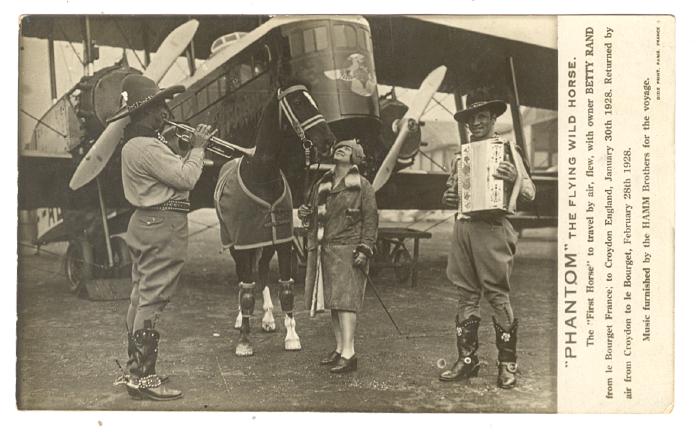
The first horse to fly by air was Phantom, owned by Betty Rand. Phantom flew from Le Bourget airport (near Paris) to Croydon (England) on the 30th January 1928 and making the return journey a month later. |
||||||||||||||||||||||||||||||||||||||||||||||||||||||||||||||||||||||||||||||||||||||||||||||||||||
 |
||||||||||||||||||||||||||||||||||||||||||||||||||||||||||||||||||||||||||||||||||||||||||||||||||||
The aircraft is a Vickers Vimy, an aircraft type originally designed as a World War I bomber but which never saw active service - the were used as passenger aircraft. Powered by twin Rolls Royce engines, the open cockpit Vimy had a top speed of 177 kph, carried 2,300 litres of fuel and had a cruising range of ca. 1,600 kilometres. Flown by Ross and Keith Smith, and accompanied by mechanics Wally Shier and Jim Bennett, a Vickers Vimy Mk IV completed the 17,910 kilometre journey from Hounslow in the UK to Darwin in Australia in 28 days at an average speed of 137 kph, and were awarded a prize of £10,000 by the Australian Government for being the first Australians to fly from England to Australia in less than 30 days. |
||||||||||||||||||||||||||||||||||||||||||||||||||||||||||||||||||||||||||||||||||||||||||||||||||||
| May 2010 | ||||||||||||||||||||||||||||||||||||||||||||||||||||||||||||||||||||||||||||||||||||||||||||||||||||
The wiltshirewhitehorses website provides a listing of not only the thirteen white horses carved into the chalk hills and downs of Wiltshire, but also provides details of Britain's other eleven chalk horses. Some of these horse carvings are ancient, the oldest being the unusually stylised Uffington White Horse, first carved in the Bronze Age. |
||||||||||||||||||||||||||||||||||||||||||||||||||||||||||||||||||||||||||||||||||||||||||||||||||||
| April 2010 | ||||||||||||||||||||||||||||||||||||||||||||||||||||||||||||||||||||||||||||||||||||||||||||||||||||
| As one of the last ever space shuttle launches has just taken place at Cape Canaveral, we felt that it was appropriate to add this piece of chain-mail miscellany to our collection. Say friend, did you know that the US Standard railroad gauge (distance between the rails) is 4 feet, 8 1/2 inches? |
||||||||||||||||||||||||||||||||||||||||||||||||||||||||||||||||||||||||||||||||||||||||||||||||||||
| March 2010 | ||||||||||||||||||||||||||||||||||||||||||||||||||||||||||||||||||||||||||||||||||||||||||||||||||||
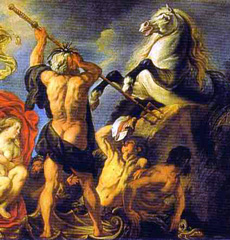
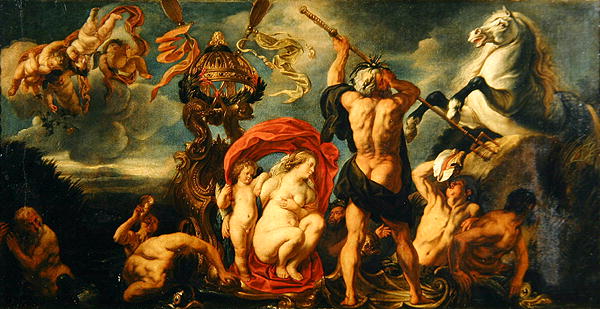
According to the ancient Greeks, in the early days of the world, following the defeat of the Titans, Zeus ruled the heavens, Poseidon ruled the seas and Hades ruled the underworld. These three brothers shared the earth between them. Legend further states that Poseidon gave the horse to the world. Some myths state that he created the first horse by striking a rock with his trident. Another states that the Earth brought forth the first horse after Poseidon's seed falling onto it. Yet another myth states that Poseidon created the first horse when trying to woo the lovely Demeter, who had asked him to create the most beautiful animal the world had ever seen. Regardless of how he managed to create the horse, Poseidon was considered to be the God of Horses - apparently also notable horseman in his own right, and protector of horse competitions. |
||||||||||||||||||||||||||||||||||||||||||||||||||||||||||||||||||||||||||||||||||||||||||||||||||||
 |
||||||||||||||||||||||||||||||||||||||||||||||||||||||||||||||||||||||||||||||||||||||||||||||||||||
Neptune Creating the Horse - Jacob Jordaens, ca. 1644 |
||||||||||||||||||||||||||||||||||||||||||||||||||||||||||||||||||||||||||||||||||||||||||||||||||||
| February 2010 | ||||||||||||||||||||||||||||||||||||||||||||||||||||||||||||||||||||||||||||||||||||||||||||||||||||
Have you ever wondered about the origin of the expressions "to be called onto the carpet" or "to be carpetted"? Apparently these expressions, relating to "being summoned before someone for reprimand", refer to members of the horse racing fraternity accused of some crime or misdemenor being summoned to stand on a particular carpet mat at an enquiry in front of the Jocky Club at Newmarket, in the UK. |
||||||||||||||||||||||||||||||||||||||||||||||||||||||||||||||||||||||||||||||||||||||||||||||||||||
| January 2010 | ||||||||||||||||||||||||||||||||||||||||||||||||||||||||||||||||||||||||||||||||||||||||||||||||||||
John 'Swift Nick' Nevison (1639 - 1684) is one of history's most flamboyant and romantic highwaymen, made famous by his charming and gentlemanly manner, and the daring of his exploits. Nevison is most remembered for an amazing ride he undertook in order to establish an alibi. According to reports, early one summer's morning in 1676 (at approximately 4 am), Nevison robbed a traveller at Gad's Hill near Rochester, in Kent. Unfortunately for Nevison, the traveller recognised him. Nevison made his escape on his bay mare, crossed the river Thames by ferry at Tilbury, and then galloped towards Chelmsfort. After resting his horse for a time, he rode on to Cambridge and Huntingdon, resting his mare regularly on the journey. Finally, he reached the Great North Road, which he followed to York - arriving at sunset. A distance of around 200 miles (ca. 320 km) completed in less than a day - an amazing feat for both man and horse. On entering York, Nevison stabled his mare at an Inn, repaired his appearance, and strolled to a bowling green where York's Lord Mayor was playing bowls. Here he engaged the Lord Mayor in conversation, entering into a wager with the Mayor on the outcome of the match, and ensuring the Lord Mayor would remember the time - 8 pm. Subsequently, when Nevison was arrested and tried for the robbery of the traveller at Gad's Hill, he produced the Lord Mayor to provide him with alibi - it was not considered possible that he could have made the 200 mile in ca. 16 hours, and thus Nevison was exonerated. |
||||||||||||||||||||||||||||||||||||||||||||||||||||||||||||||||||||||||||||||||||||||||||||||||||||
| December 2009 | ||||||||||||||||||||||||||||||||||||||||||||||||||||||||||||||||||||||||||||||||||||||||||||||||||||
In December, we like to try to find Christmas or New Year traditions relating to horses. This year, we have found an old (and apparently almost defunct) Welsh tradition known as the 'Mari Lwyd' (or 'Grey Mare'). It is possible that this tradition derives from the ancient worship of the Goddess Rhiannon. The skull of a horse, decorated with colourful ribbons, is fixed to a pole in such a way that the jaws can be manipulated open and shut by the pole-bearer, who is covered with a white sheet flowing down from the skull. The Mari, accompanied by a boisterous party of local men, goes from door to door through the village, snapping its jaws at passersby. At each door, the ritual begins with the singing of traditional stanzas by the Mari Lwyd party, challenging the householder for entry into the house. Next follows the pwnco, an exchange of wits in traditional and improptu verse, usually consisting of heavy leg pulling in which the combatants mock each other's "singing, drunkeness, niggardliness etc". If the Mari Lwyd can "subdue the inmates with superior witticisms and extempore humerous rhymes", the party may storm the house and partake of Christmas cheer (in the form of cakes and ale) with the inhabitants. On departure, the ritual is completed by the singing of a farewell song. |
||||||||||||||||||||||||||||||||||||||||||||||||||||||||||||||||||||||||||||||||||||||||||||||||||||
|
||||||||||||||||||||||||||||||||||||||||||||||||||||||||||||||||||||||||||||||||||||||||||||||||||||
| November 2009 | ||||||||||||||||||||||||||||||||||||||||||||||||||||||||||||||||||||||||||||||||||||||||||||||||||||
"Thus speaks Kikkuli, master horse trainer of the land of Mitanni". So begins the Kikkuli Text, a document inscribed in cuneiform on four clay tablets and detailing the physical conditioning of chariot horses in 1345 BC. Kikkuli was the Mitannian horse master to the Hittite king Suppililuma, and developed the first recorded plan for conditioning and caring for race horses, using methods which are still considered sound today. Kikkuli's text describes a seven month training program, prescribing exercise and rest for the horse. The exercise regime features interval training, and required horses fitness and strength be increased by work at walk, trot, canter and gallop whilst being led from chariots before horses were asked to bear the weight of a rider, or to pull a chariot themselves. The interval training consisted of three stages - "the first two for developing strong legs and a strong cardio-muscular system, and the third for increasing neuromuscular conditioning. His workouts included brief recoveries to lower the heart rate. Swimming was also included in intervals of three to five sessions, with rest periods after each session". Click here for an example of some of Kikkuli's training plan, translated by Anthony Dent from the French translation of the original by B. Hrozy. |
||||||||||||||||||||||||||||||||||||||||||||||||||||||||||||||||||||||||||||||||||||||||||||||||||||
| October 2009 | ||||||||||||||||||||||||||||||||||||||||||||||||||||||||||||||||||||||||||||||||||||||||||||||||||||
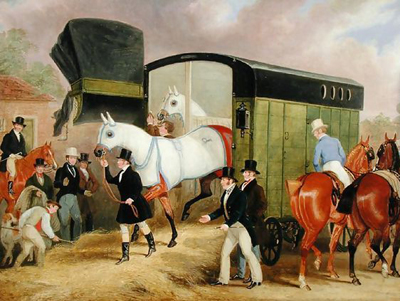
| Why do Australians call a horse float a horse float, and not a trailer? | ||||||||||||||||||||||||||||||||||||||||||||||||||||||||||||||||||||||||||||||||||||||||||||||||||||
| The noun 'float' is first attested from the 12th Century AD, when the word 'flot' meant a body of water. From 1557, a raft or flat bottomed boat might be called a float, and it is believed that anything that looked like a flat bottomed boat and 'glided along' might be called a float. From 1866, low-bodied carts for carrying heavy loads or livestock was called a float, and according to Wordwatch, it is from this "low and level" cart that we get the current usage of the word float. This includes not only the horse float, but also parade floats, and milk floats (in the UK). | ||||||||||||||||||||||||||||||||||||||||||||||||||||||||||||||||||||||||||||||||||||||||||||||||||||
 |
||||||||||||||||||||||||||||||||||||||||||||||||||||||||||||||||||||||||||||||||||||||||||||||||||||
| September 2009 | ||||||||||||||||||||||||||||||||||||||||||||||||||||||||||||||||||||||||||||||||||||||||||||||||||||
| Below is a selection of some of the books on horsemanship and riding art written prior to the 20th Century. | ||||||||||||||||||||||||||||||||||||||||||||||||||||||||||||||||||||||||||||||||||||||||||||||||||||
|
||||||||||||||||||||||||||||||||||||||||||||||||||||||||||||||||||||||||||||||||||||||||||||||||||||
The Michegan State University Library holds a collection of rare Veterinary books, many of which deal with horses and horsemanship. An extensive catalogue of the collection was compiled by Henry Koch. Please click here to go the collection. |
||||||||||||||||||||||||||||||||||||||||||||||||||||||||||||||||||||||||||||||||||||||||||||||||||||
| August 2009 | ||||||||||||||||||||||||||||||||||||||||||||||||||||||||||||||||||||||||||||||||||||||||||||||||||||
| The word farrier - meaning 'one who shoes horses' - comes from the Latin ferririus, or 'iron worker'. | ||||||||||||||||||||||||||||||||||||||||||||||||||||||||||||||||||||||||||||||||||||||||||||||||||||
| July 2009 | ||||||||||||||||||||||||||||||||||||||||||||||||||||||||||||||||||||||||||||||||||||||||||||||||||||
| Did you know that there are various Catholic saints that offer protection to horses and their riders? Some of them are listed below: | ||||||||||||||||||||||||||||||||||||||||||||||||||||||||||||||||||||||||||||||||||||||||||||||||||||
| Anthony of Padua, Colman of Stockerau, Eligius, George, Giles, Hippolytus, Leonard of Noblac, Martin of Tours and Vincent de Paul are all patron saints of horses. | ||||||||||||||||||||||||||||||||||||||||||||||||||||||||||||||||||||||||||||||||||||||||||||||||||||
| George, Anne, James the Greater and Martin of Tours are patron saints of equestrians and horsemen. | ||||||||||||||||||||||||||||||||||||||||||||||||||||||||||||||||||||||||||||||||||||||||||||||||||||
| It is not uncommon for people to attach a small talisman with the image of one of the patron saints to the headstall, bridle or saddle of their horses in some parts of the world. | ||||||||||||||||||||||||||||||||||||||||||||||||||||||||||||||||||||||||||||||||||||||||||||||||||||
| June 2009 | ||||||||||||||||||||||||||||||||||||||||||||||||||||||||||||||||||||||||||||||||||||||||||||||||||||
In an attempt to mislead a pursuing or tracking enemy, horse's shoes were sometimes attached backwards - toe to heels. This cunning method was apparently used in the 11th century by King Alphonso in his escape from the Moorish King Ali Maymon of Toledo, Spain; in 1303 by Robert the Bruce in his escape from King Edward; and in 1530 by Duke Christopher of Würtemburg in his escape from Emperor Charles V. If one believes movies, it was also a common practice in the American Old West. |
||||||||||||||||||||||||||||||||||||||||||||||||||||||||||||||||||||||||||||||||||||||||||||||||||||
| May 2009 | ||||||||||||||||||||||||||||||||||||||||||||||||||||||||||||||||||||||||||||||||||||||||||||||||||||
The adjective 'tacky', defined by the Oxford English Dictionary as meaning "showing poor taste and quality", began as a noun, tackey, denoting a nag, or an inferior horse. It was first used in print in the United States in 1800 describing 'a cheap pony'. |
||||||||||||||||||||||||||||||||||||||||||||||||||||||||||||||||||||||||||||||||||||||||||||||||||||
| April 2009 | ||||||||||||||||||||||||||||||||||||||||||||||||||||||||||||||||||||||||||||||||||||||||||||||||||||
 |
||||||||||||||||||||||||||||||||||||||||||||||||||||||||||||||||||||||||||||||||||||||||||||||||||||
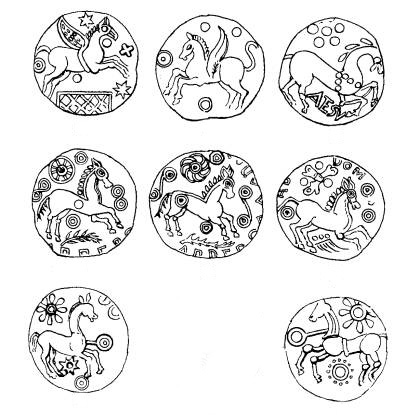
The Sun-Horse, figured so freely on the Briton coins, does not appear on Early Sumerian or Hittite seals, where its place is taken by the Sun-Hawk or Eagle. But it appears later and on Phoenician coins. This horse is presumably the basis of Thor's horse (or Odinn's) of the Goths and Ancient Britons-on which Father Thor himself as Jupiter Tonans, The Thunderer, with his bolts, latterly rode, and he is so figured riding on early Briton monuments. The traditional worship of "Odinn's horses" still persists in some parts of England--for example in Sussex, where I observed bunches of corn tied up to the gables of several old timbered cottages and steadings, and was told that it was to feed "Odinn's horses" as a propitiation against lightning bolts. Offerings of grain to Indra's Sun-horses are repeatedly mentioned in the Vedic hymns; and the horses are invoked also in prayers as the vehicle for Indra's visitations. The Sun-horse of the Ancient Britons is also the source of the modern superstition regarding the good luck of finding a horse-shoe pointing towards you--on the notion that it might have been dropped by Odinn's horse. Excerpt from The Phoenician origin of Britons, Scots & Anglo-Saxons by L.A. Waddell, 1924. |
||||||||||||||||||||||||||||||||||||||||||||||||||||||||||||||||||||||||||||||||||||||||||||||||||||
| March 2009 | ||||||||||||||||||||||||||||||||||||||||||||||||||||||||||||||||||||||||||||||||||||||||||||||||||||
| What is the origin of the idiom "to get one's goat" come from? | ||||||||||||||||||||||||||||||||||||||||||||||||||||||||||||||||||||||||||||||||||||||||||||||||||||
The most popular theory for the origin of this idiom comes from prominent writer and commentator H.L Mencken, who (among others), traces the phrase back to the racetrack, where trainers believed that putting a goat in a skittish racehorse's stall would calm the horse. If an unscrupulous gambler stole the goat the night before an important race, this theory goes, the horse might be so upset that its performance would be affected. Ergo, "to get one's goat" meaning "to upset and thereby make vulnerable." |
||||||||||||||||||||||||||||||||||||||||||||||||||||||||||||||||||||||||||||||||||||||||||||||||||||
| February 2009 | ||||||||||||||||||||||||||||||||||||||||||||||||||||||||||||||||||||||||||||||||||||||||||||||||||||
| The Unicorn | ||||||||||||||||||||||||||||||||||||||||||||||||||||||||||||||||||||||||||||||||||||||||||||||||||||
| A description by Jorge Luis Borges, from The Book of Imaginary Beings. | ||||||||||||||||||||||||||||||||||||||||||||||||||||||||||||||||||||||||||||||||||||||||||||||||||||
The first and last versions of the Unicorn are virtually identical. Four centuries before the Christian era, the Greek author Ctesias, physician to Artaxerxes Mnemon, reported that in the kingdoms of Hindustan there were extremely swift wild asses, which white skin, a purple head, blue eyes, and a sharp horn on the forehead; the base of this horn, Ctesias tells us, was white, its tip was red, and in the middle it was thoroughly black. Pliny (VIII, 31) gives yet more detail: |
||||||||||||||||||||||||||||||||||||||||||||||||||||||||||||||||||||||||||||||||||||||||||||||||||||
"The Orsæan Indians hunt down ... a very fierce animal called the monoceros, which has the head of the stag, the feet of the elephant, and the tail of the boar, while the rest of the body is like that of the horse; it makes a deep lowing noise, and has a single black horn, which projects from the middle of its forehead, two cubits in length. This animal, it is said, cannot be taken alive". |
||||||||||||||||||||||||||||||||||||||||||||||||||||||||||||||||||||||||||||||||||||||||||||||||||||
In 1892, the Orientalist Schrader posited that the Unicorn might have been suggested to the Greeks by certain Persian bas reliefs portraying bulls in profile, so that only one horn was shown. |
||||||||||||||||||||||||||||||||||||||||||||||||||||||||||||||||||||||||||||||||||||||||||||||||||||
In the Etymologies of Isidore of Seville (composed in the early seventh century), we read that a blow from the horn of the Unicorn can kill an elephant; this recalls the analogous victory of the Karkadan (rhinoceros) in the second voyage of Sinbad. Another of the Unicorn's adversaries was the lion, and one of the nine-line 'Spenserians' in the second book of that tangled allegory The Faërie Queene has preserved the way a battle between those two noble creatures might be fought: The lion would stand in front of a tree; the Unicorn, head lowered, charges; the lion steps aside, and the Unicorn's horn sticks in the tree trunk. This description dates from the sixteenth century; at the beginning of the eighteenth, the union between England and Scotland would pit the English Leopart (or Lion) against the Scottish Unicorn on the kingdoms' coats of arms. |
||||||||||||||||||||||||||||||||||||||||||||||||||||||||||||||||||||||||||||||||||||||||||||||||||||
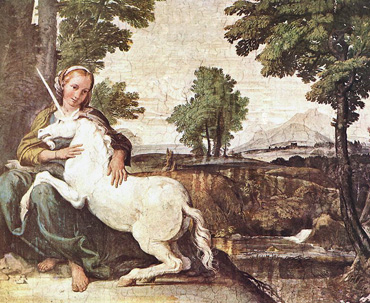
In the Middle Ages, bestiaries taught that the Unicorn might be captured by a virgin; in the Physiologus Græcus, we read the following: "He can be trapped by the following strategem: A virgin girl is led to where he lurks, and there she is sent of by herself into the wood. He soon leaps into her lap when he sees her, and embraces her, and hence he gets caught". A medallion by Pisanello and many famous tapestries illustrate this victory, whose allegorical applications are familiar to us all. The Holy Spirit, Christ, mercury, and evil have been symbolised at one time or another by the Unicorn. Jung's treatise Psychologie und Alchemie (Zürich, 1944) records and analyses these symbols. |
||||||||||||||||||||||||||||||||||||||||||||||||||||||||||||||||||||||||||||||||||||||||||||||||||||
A little white horse with the forelegs of an anetlope, the beard of a goat, and a long twisted horn on its forehead is today the most common image of this fantastic animal. |
||||||||||||||||||||||||||||||||||||||||||||||||||||||||||||||||||||||||||||||||||||||||||||||||||||
. |
||||||||||||||||||||||||||||||||||||||||||||||||||||||||||||||||||||||||||||||||||||||||||||||||||||
Leonardo da Vinci attributes the Unicorn's capture to the beast's "lack of temperance" and "the delight that it has for young maidens"; that aspect of its nature makes it "forget its ferocity and wildness" and lie in the lap of the maiden, and thus it is captured by hunters. |
||||||||||||||||||||||||||||||||||||||||||||||||||||||||||||||||||||||||||||||||||||||||||||||||||||
 |
||||||||||||||||||||||||||||||||||||||||||||||||||||||||||||||||||||||||||||||||||||||||||||||||||||
. |
||||||||||||||||||||||||||||||||||||||||||||||||||||||||||||||||||||||||||||||||||||||||||||||||||||
| January 2009 | ||||||||||||||||||||||||||||||||||||||||||||||||||||||||||||||||||||||||||||||||||||||||||||||||||||
Here are some thoughts on the judging (and therefore the riding) of young horse dressage tests, written by Susie Hoevenaars and Mary Seefried for Dressage NSW, 2008. |
||||||||||||||||||||||||||||||||||||||||||||||||||||||||||||||||||||||||||||||||||||||||||||||||||||
| December 2008 | ||||||||||||||||||||||||||||||||||||||||||||||||||||||||||||||||||||||||||||||||||||||||||||||||||||
| For those with a penchant for the arcane, we have collected several articles on the genetics of Iberian horses. | ||||||||||||||||||||||||||||||||||||||||||||||||||||||||||||||||||||||||||||||||||||||||||||||||||||
| November 2008 | ||||||||||||||||||||||||||||||||||||||||||||||||||||||||||||||||||||||||||||||||||||||||||||||||||||
We often hear and read that the pure bred Arab horse has one rib, and one lumbar vertebrae less than all other breeds of horses, a statement possibly attributable to Carter (The Story of the Horse, National Geographic magazine, 1923), in his discussion of native horses North Africa. Whilst it is true that many pure bred Arab horses have one rib and one lumbar vertebrae less than many horses of other breeds, it is not a hard and fast rule. Lady Wentworth, in her book The Authentic Arabian Horse (1943), gives "...some of the more notable results of post-mortems" on the subject: |
||||||||||||||||||||||||||||||||||||||||||||||||||||||||||||||||||||||||||||||||||||||||||||||||||||
|
||||||||||||||||||||||||||||||||||||||||||||||||||||||||||||||||||||||||||||||||||||||||||||||||||||
Scientific studies, such as Anatomical Variations of the Spine in the Horse (Robert M. Stecher, Journal of Mammology, 1962) indicate similar variations in the number of ribs/lumbar vertebrae per horse. |
||||||||||||||||||||||||||||||||||||||||||||||||||||||||||||||||||||||||||||||||||||||||||||||||||||
| October 2008 | ||||||||||||||||||||||||||||||||||||||||||||||||||||||||||||||||||||||||||||||||||||||||||||||||||||
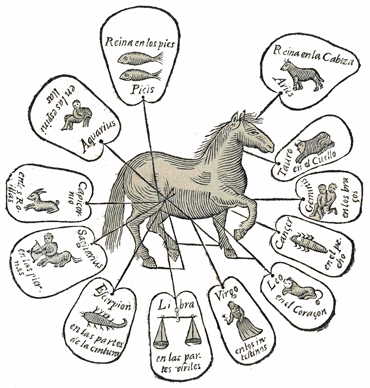
| 'Zodiac Horse' from 'Obras de Albeyteria' by Martín Arredondo, 1704. | ||||||||||||||||||||||||||||||||||||||||||||||||||||||||||||||||||||||||||||||||||||||||||||||||||||
Astrology played an important part in medieval and renaissance medicine, whereby the influence of the stars on the body was studied and charted. Veterinarians followed the same techniques for horses. In this chart, the signs of the zodiac are associated with different parts of the horse's anatomy. |
||||||||||||||||||||||||||||||||||||||||||||||||||||||||||||||||||||||||||||||||||||||||||||||||||||
 |
||||||||||||||||||||||||||||||||||||||||||||||||||||||||||||||||||||||||||||||||||||||||||||||||||||
| September 2008 | ||||||||||||||||||||||||||||||||||||||||||||||||||||||||||||||||||||||||||||||||||||||||||||||||||||
Very often, in books on the history of the andalusian or Spanish horse and even in material published by the official stud book, reference is made to the Spanish horse in history and the praise that has been heaped upon this breed by classical authors such as Xenephon, Pliny and Seneca. But no one ever says just what these authors wrote. Being of curious dispositions, we have attempted to determine 'what was really said'. So far, we have been able to uncover Pliny the Elder's comments on The Horse, including several comments on Iberian horse breeds. Click here to find out more. |
||||||||||||||||||||||||||||||||||||||||||||||||||||||||||||||||||||||||||||||||||||||||||||||||||||
| August 2008 | ||||||||||||||||||||||||||||||||||||||||||||||||||||||||||||||||||||||||||||||||||||||||||||||||||||
| ANCCE has released some information on the joint disease OCD. Please click here to read more. | ||||||||||||||||||||||||||||||||||||||||||||||||||||||||||||||||||||||||||||||||||||||||||||||||||||
| July 2008 | ||||||||||||||||||||||||||||||||||||||||||||||||||||||||||||||||||||||||||||||||||||||||||||||||||||
Theodosius I, a passionate horseman who would eventually become the Emporer of Rome, was born in Spain in 346 A.D. According to B. Davis, he passed laws limiting saddle weights to 60 pounds, and saddle bags to 35 pounds; to disobey this law would result in the confiscation of the equipment. He also stated that Imperial horses were not to begin their training until age six and were to be retired at twenty. He is possibly better known for making christianity the official religion of the Roman Empire, and (in supporting christianity) ordering the destruction of 'pagan' temples, which resulted in the destruction of the Library at Alexandria. |
||||||||||||||||||||||||||||||||||||||||||||||||||||||||||||||||||||||||||||||||||||||||||||||||||||
| July 2008 | ||||||||||||||||||||||||||||||||||||||||||||||||||||||||||||||||||||||||||||||||||||||||||||||||||||
Florinus, in his Hausbuch of 1750 asserted that ropes that had been used in hanging were worth their weight in gold. "Covered with a woollen cloth and wrapped around the legs of refractory horses, they turned the worst criminals into lambs". |
||||||||||||||||||||||||||||||||||||||||||||||||||||||||||||||||||||||||||||||||||||||||||||||||||||
| June 2008 | ||||||||||||||||||||||||||||||||||||||||||||||||||||||||||||||||||||||||||||||||||||||||||||||||||||
| The first olympic games to feature mounted horses (race) was held in 624 B.C. | ||||||||||||||||||||||||||||||||||||||||||||||||||||||||||||||||||||||||||||||||||||||||||||||||||||
| May 2008 | ||||||||||||||||||||||||||||||||||||||||||||||||||||||||||||||||||||||||||||||||||||||||||||||||||||
| Lethologica | ||||||||||||||||||||||||||||||||||||||||||||||||||||||||||||||||||||||||||||||||||||||||||||||||||||
| noun | ||||||||||||||||||||||||||||||||||||||||||||||||||||||||||||||||||||||||||||||||||||||||||||||||||||
| The inability to remember a word or call to mind the right word. | ||||||||||||||||||||||||||||||||||||||||||||||||||||||||||||||||||||||||||||||||||||||||||||||||||||
An unfairly complicated for an all too common condition. It is derived from the Greek lethe meaning 'forgetfulness' and logos meaning 'word'. |
||||||||||||||||||||||||||||||||||||||||||||||||||||||||||||||||||||||||||||||||||||||||||||||||||||
| April 2008 | ||||||||||||||||||||||||||||||||||||||||||||||||||||||||||||||||||||||||||||||||||||||||||||||||||||
| Home pregnancy tests for horses | ||||||||||||||||||||||||||||||||||||||||||||||||||||||||||||||||||||||||||||||||||||||||||||||||||||
| Along with such oft heard wisdoms that a mare exhibiting stallion behaviour during a pregnancy is carrying a colt, and that a mare showing in season during pregnancy is carrying a filly, we can offer the following superstition: | ||||||||||||||||||||||||||||||||||||||||||||||||||||||||||||||||||||||||||||||||||||||||||||||||||||
Take a hair from the mare's tail, and tie a nail to it. Hold the nail on the hair over the mare's hips. If it doesn't swing, the mare is not pregnant. If it swings in a circle, the mare is carrying a filly, and if it swings straight, she is carrying a colt. |
||||||||||||||||||||||||||||||||||||||||||||||||||||||||||||||||||||||||||||||||||||||||||||||||||||
| March 2008 | ||||||||||||||||||||||||||||||||||||||||||||||||||||||||||||||||||||||||||||||||||||||||||||||||||||
| Did you know? | ||||||||||||||||||||||||||||||||||||||||||||||||||||||||||||||||||||||||||||||||||||||||||||||||||||
It appears that the 'need for speed' is not a modern phenomenon. Leslie D. Johnson in his essay Speeding in Antiquity (The Classical Journal, 1949) provides several examples for our edification: |
||||||||||||||||||||||||||||||||||||||||||||||||||||||||||||||||||||||||||||||||||||||||||||||||||||
"Hither, my Cynthia is borne by her well clipped ponies. The excuse was Juno, but Venus was the actual reason. Oh, Appian Way, tell me, I beg, how great a triumph did she celebrated, as you watched, hurling her wheels headlong over your stones, a show, herself, sitting on the very edge of the pole, she hovered, and dared to shake her reins through the rough places." From Propertius |
||||||||||||||||||||||||||||||||||||||||||||||||||||||||||||||||||||||||||||||||||||||||||||||||||||
"Driving his team, he (the rich man, bored with life) races headlong to his villa, rushing on as if to bring aid to a burning building" From Lucretius, whose 'burning building'' comment makes us wonder whether there really are any new quips under the sun. |
||||||||||||||||||||||||||||||||||||||||||||||||||||||||||||||||||||||||||||||||||||||||||||||||||||
"That well-known Sabinus, whom you see, my friends, says that he was the swiftest of mule-drivers and that no onward rush of any flying car could pass him by..." From Virgil |
||||||||||||||||||||||||||||||||||||||||||||||||||||||||||||||||||||||||||||||||||||||||||||||||||||
It appears, however, that not all citizens were fond of such dashing driving. Johnson writes that: sympathetic Claudius appeared to listen to desparate pleas for action, for Suetonius says: "he provided by an edict that travellers should not pass through the towns of Italy except on foot, or in a chair or litter". The earliest of pedestrian zones, perhaps? |
||||||||||||||||||||||||||||||||||||||||||||||||||||||||||||||||||||||||||||||||||||||||||||||||||||
| February 2008 | ||||||||||||||||||||||||||||||||||||||||||||||||||||||||||||||||||||||||||||||||||||||||||||||||||||
| For those of you with an interest in free jumping horses, here are some thoughts on free jumping by Volker Ehlers, of the American Hanoverian Society. | ||||||||||||||||||||||||||||||||||||||||||||||||||||||||||||||||||||||||||||||||||||||||||||||||||||
| Thoughts on Free Jumping | ||||||||||||||||||||||||||||||||||||||||||||||||||||||||||||||||||||||||||||||||||||||||||||||||||||
| January 2008 | ||||||||||||||||||||||||||||||||||||||||||||||||||||||||||||||||||||||||||||||||||||||||||||||||||||
According to legend, the first Bagel was created in 1683 by a Viennese baker wanting to pay tribute to Polish king Jan III Sobieski for saving the Austrian people from Turkish invaders during the Battle of Vienna. The king, apparently, was excessively fond of riding and so the baker formed the bread in the shape of a stirrup ( bügel in German). Traditionally, hand made bagels are not round, but slightly stirrup-shaped. |
||||||||||||||||||||||||||||||||||||||||||||||||||||||||||||||||||||||||||||||||||||||||||||||||||||
It is thought that the name changed to Bagel following its introduction to New York in 1880. |
||||||||||||||||||||||||||||||||||||||||||||||||||||||||||||||||||||||||||||||||||||||||||||||||||||
Whilst some information indicates that bagels were around as early as 1810, we think that the stirrup legend is much more fun. |
||||||||||||||||||||||||||||||||||||||||||||||||||||||||||||||||||||||||||||||||||||||||||||||||||||
| December 2007 | ||||||||||||||||||||||||||||||||||||||||||||||||||||||||||||||||||||||||||||||||||||||||||||||||||||
| Just in time for Christmas, we have dug around and investigated the history of the Hobby Horse. Click on the link below to find out more. | ||||||||||||||||||||||||||||||||||||||||||||||||||||||||||||||||||||||||||||||||||||||||||||||||||||
| History of the Hobby Horse | ||||||||||||||||||||||||||||||||||||||||||||||||||||||||||||||||||||||||||||||||||||||||||||||||||||
| November 2007 | ||||||||||||||||||||||||||||||||||||||||||||||||||||||||||||||||||||||||||||||||||||||||||||||||||||
In February 1938, Arthur Walton and John Hammond from Cambridge University's School of Agriculture published their study on 'The maternal effects on growth and conformation in Shire horse-Shetland pony crosses'. Since this time, many other studies have been performed, however this one seems almost to have passed almost into folklore, and is referred to by many in discussions such as "can the foal grow too big for the mare to safely foal?", or "what size stallion can I put to my mare?". |
||||||||||||||||||||||||||||||||||||||||||||||||||||||||||||||||||||||||||||||||||||||||||||||||||||
| Whether you have such questions, or would just like to read this notable study, we are sure you won't be disappointed. | ||||||||||||||||||||||||||||||||||||||||||||||||||||||||||||||||||||||||||||||||||||||||||||||||||||
| The maternal effects on growth and conformation in Shire horse-Shetland pony crosses | ||||||||||||||||||||||||||||||||||||||||||||||||||||||||||||||||||||||||||||||||||||||||||||||||||||
| October 2007 | ||||||||||||||||||||||||||||||||||||||||||||||||||||||||||||||||||||||||||||||||||||||||||||||||||||
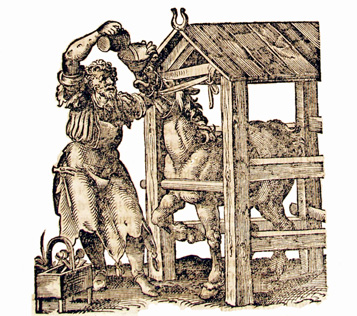
| Veterinary Practice, ca. 1584 | ||||||||||||||||||||||||||||||||||||||||||||||||||||||||||||||||||||||||||||||||||||||||||||||||||||
Whilst tying a horses head up and using a funnel to administer a drench may no longer be common practice, the crush itself is quite similar in it's basic design to many available today. The horse shoe decoration is a nice touch. |
||||||||||||||||||||||||||||||||||||||||||||||||||||||||||||||||||||||||||||||||||||||||||||||||||||
 |
||||||||||||||||||||||||||||||||||||||||||||||||||||||||||||||||||||||||||||||||||||||||||||||||||||
| September 2007 | ||||||||||||||||||||||||||||||||||||||||||||||||||||||||||||||||||||||||||||||||||||||||||||||||||||
Dasypygal |
||||||||||||||||||||||||||||||||||||||||||||||||||||||||||||||||||||||||||||||||||||||||||||||||||||
| Adjective |
||||||||||||||||||||||||||||||||||||||||||||||||||||||||||||||||||||||||||||||||||||||||||||||||||||
Having hairy buttocks. |
||||||||||||||||||||||||||||||||||||||||||||||||||||||||||||||||||||||||||||||||||||||||||||||||||||
The word is derived from the Greek dasys meaning 'hairy' and pyge meaning 'buttocks'. It is pronounced 'das-i-pai-gul', with the emphasis on the third syllable. This adjective may be useful in describing your horse, or the men in your life. |
||||||||||||||||||||||||||||||||||||||||||||||||||||||||||||||||||||||||||||||||||||||||||||||||||||
August 2007 |
||||||||||||||||||||||||||||||||||||||||||||||||||||||||||||||||||||||||||||||||||||||||||||||||||||
A useful tip courtesy of Pliny the Elder: |
||||||||||||||||||||||||||||||||||||||||||||||||||||||||||||||||||||||||||||||||||||||||||||||||||||
"If a horse be shod with shoes made from a sword wherewith a man has been slain, he will be most swift and fleet, and never, though never so hard rode, tire." |
||||||||||||||||||||||||||||||||||||||||||||||||||||||||||||||||||||||||||||||||||||||||||||||||||||
| July 2007 | ||||||||||||||||||||||||||||||||||||||||||||||||||||||||||||||||||||||||||||||||||||||||||||||||||||
| Interesting things to do with your horse: | ||||||||||||||||||||||||||||||||||||||||||||||||||||||||||||||||||||||||||||||||||||||||||||||||||||
| "To find a vampire, lead a white horse through a graveyard. The grave he will not step on is the grave of the vampire." | ||||||||||||||||||||||||||||||||||||||||||||||||||||||||||||||||||||||||||||||||||||||||||||||||||||